

Quick Answers




Why different secondary machining techniques are used?
- June 19, 2025
- Jason Chang
- 9:26 am
Secondary machining techniques play a crucial role in the manufacturing industry, where precision and efficiency are paramount.
These techniques are employed to achieve the desired dimensional accuracy, surface finish, and overall quality of the final product.
This article will explore the various reasons why different secondary machining techniques are used in manufacturing processes.
From milling and turning to grinding and drilling, each technique offers unique advantages that cater to specific requirements in the production of a wide range of components.
Increased Precision
One of the primary reasons why different secondary machining techniques are used is to achieve increased precision in the final product.
While primary machining processes like casting or forging may produce components with acceptable tolerances, secondary machining allows manufacturers to fine-tune the dimensions to exact specifications.
Techniques such as milling and grinding enable operators to remove small amounts of material with high accuracy, ensuring that the final product meets the required dimensional tolerances.
Surface Finish Enhancement
Secondary machining techniques are also utilized to enhance the surface finish of components.
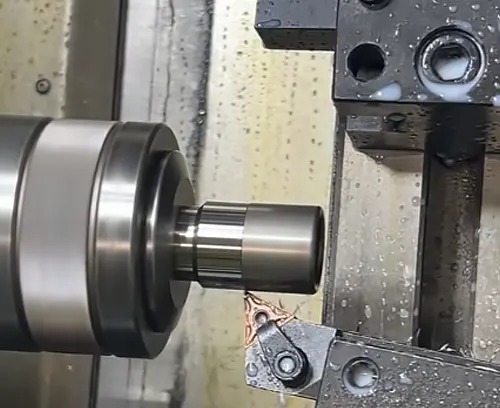
Primary manufacturing processes may leave behind rough surfaces or unwanted imperfections, which can affect the functionality and aesthetics of the final product. By employing techniques such as turning and polishing, manufacturers can achieve smooth surfaces with minimal imperfections.
This is especially crucial in industries such as aerospace and medicine, where surface quality is vital for both performance and safety.
Complex Geometries
Another reason why different secondary machining techniques are employed is to create complex geometries that cannot be achieved through primary processes alone.
Advanced techniques like 5-axis machining and electro-discharge machining (EDM) allow manufacturers to produce intricate shapes and features with high precision.
These techniques enable the production of components with intricate designs, such as turbine blades, impellers, and medical implants, which require intricate details and precise dimensions.
Material Compatibility
Secondary machining techniques are often used to process materials that are difficult to machine using conventional methods.
Certain materials, such as hardened steels, titanium alloys, and ceramics, have properties that make them challenging to cut or shape using standard machining processes.
Techniques like grinding, laser cutting, and abrasive water jet machining are utilized to overcome these challenges and produce high-quality components from a wide range of materials.
Tolerance Requirements
In some cases, components must meet tight tolerance requirements that cannot be achieved through primary machining processes alone.
Secondary machining techniques like honing, lapping, and reaming are used to improve the dimensional accuracy of components, ensuring that they fit together seamlessly during assembly.
These techniques are particularly important in industries like automotive and aerospace, where precision is essential for the functionality and performance of the final product.
Cost-Effectiveness
While secondary machining techniques may add to the overall production cost, they can often be more cost-effective than alternative methods, such as fabricating entirely new components.
By utilizing techniques like drilling, tapping, and milling, manufacturers can modify existing components to meet specific requirements, saving time and resources compared to starting from scratch.
This cost-effective approach allows companies to meet customer demands without compromising on quality or lead times.
Conclusion
Secondary machining techniques are indispensable tools in the manufacturing industry, offering a wide range of benefits that are essential for producing high-quality components.
From precision and surface finish enhancement to complex geometries and material compatibility, these techniques play a crucial role in meeting the diverse needs of modern manufacturing processes.
By understanding the reasons why different secondary machining techniques are used, engineers and manufacturers can optimize their production processes and achieve superior results in terms of quality, efficiency, and cost-effectiveness.